
The Parasite That Turns Snails Into Pulsing Caterpillars
The Leucochloridium flatworm takes over a snail's mind, drives it into the sunlight, and turns its eyestalks into colorful, pulsating tubes that birds can't resist eating.


Specimen classification
Type
Parasitic flatworm
Host
Amber snails
Location
Europe and North America
Disguise
Pulsing caterpillar
Some parasites hide. Leucochloridium paradoxum puts on a brightly colored, pulsating light show. But it does this using the body of a snail.
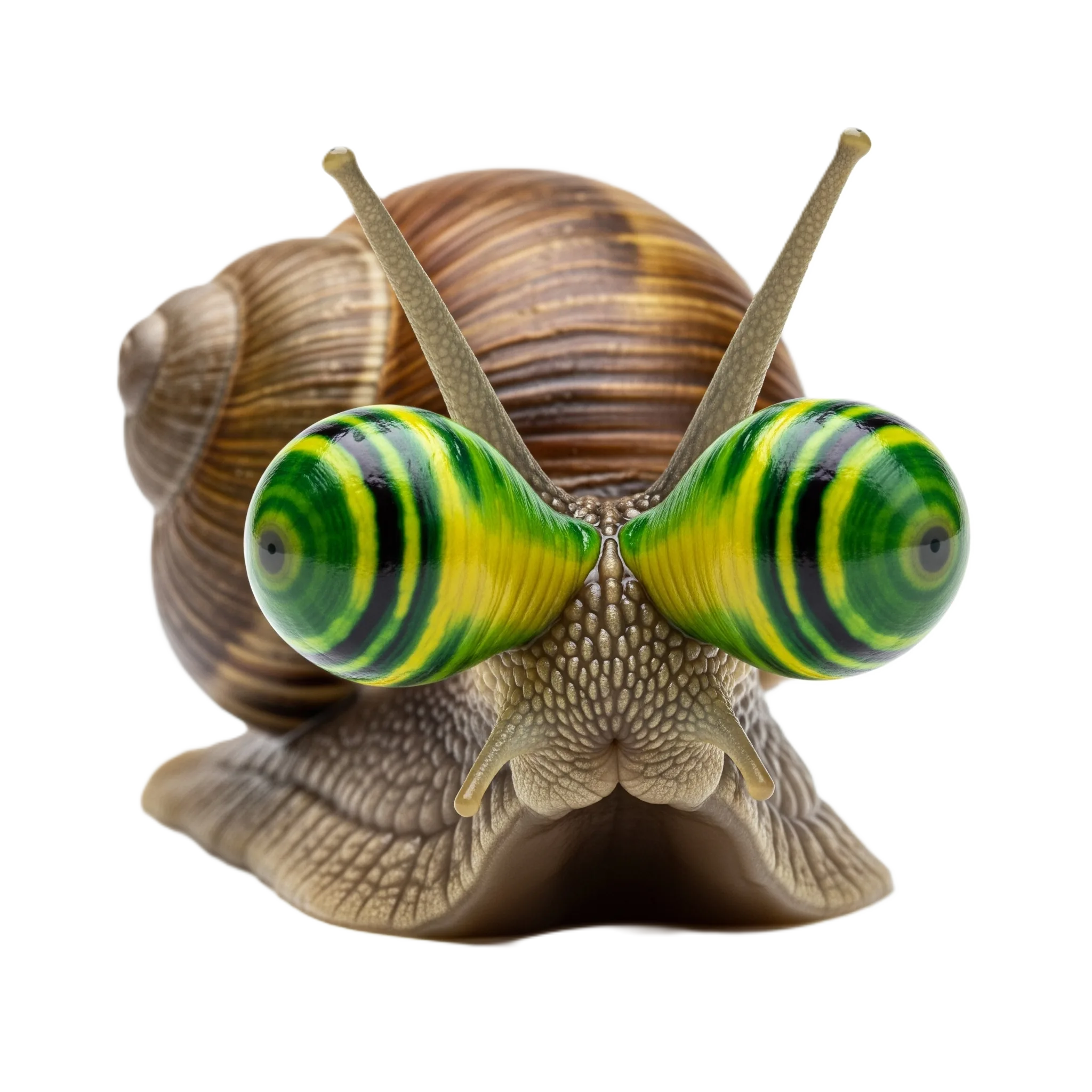
This flatworm invades a snail, takes over its brain, and transforms its eyestalks into swollen, banded, thrashing tubes that look exactly like caterpillars. And then it waits for a bird.
Zombie Snail


This fact has been locked for your safety.
The Invasion
The nightmare begins on the forest floor. A snail eats bird droppings that happen to contain the microscopic eggs of the flatworm. Once inside the snail's digestive system, the eggs hatch.
The flatworms grow and form a massive network of tubes throughout the snail's body. As they mature, they pack hundreds of themselves into a special sac called a broodsac.
The Caterpillar Disguise
The broodsac grows so large that it pushes its way into the snail's translucent eyestalks, stretching them out. The sac is banded with bright green, brown, and white stripes.
Inside the eyestalks, the sac begins to rapidly pulse and twitch. To a hungry bird looking down from above, the snail's eyestalk no longer looks like part of a snail — it looks exactly like a juicy, wriggling caterpillar.
Weird detail
The parasite only pulses when it senses daylight. In the dark, it stops moving to save energy, knowing birds only hunt by sight during the day.
The Mind Control
Having a great disguise isn't enough if the snail stays hidden in the dark, damp places it usually prefers. So the parasite alters the snail's behavior.
It somehow rewires the snail's brain, forcing it to crawl out into the open, climb up high onto exposed leaves, and sit perfectly still in the bright sunlight — effectively serving itself up on a silver platter.
Danger
When a bird swoops down, it usually bites off just the swollen eyestalk. The snail survives, regenerates its eyestalk, and can actually be infected again.
The Final Stage
Once the bird eats the "caterpillar", the flatworms safely reach their final destination: the bird's gut. There, they finally become adults, reproduce, and lay eggs.
The eggs are pooped out onto leaves by the bird, waiting for another unsuspecting snail to come along and eat them.
Science bit
This multi-host lifecycle is common in parasites, but Leucochloridium is unique in its spectacular, visual method of moving from snail to bird.

Dr. Icky's verdict
“Mind control, radical body modification, and a brightly colored light show, all designed specifically to get eaten by a bird. Nature is ruthless, and this worm is an artist of disgust.”
Classify it yourself
234 specimens are waiting
Scan this specimen, survive the quiz, and master it in the free app — then hunt the other 233.