
The Fungus That Turns Ants Into Zombies
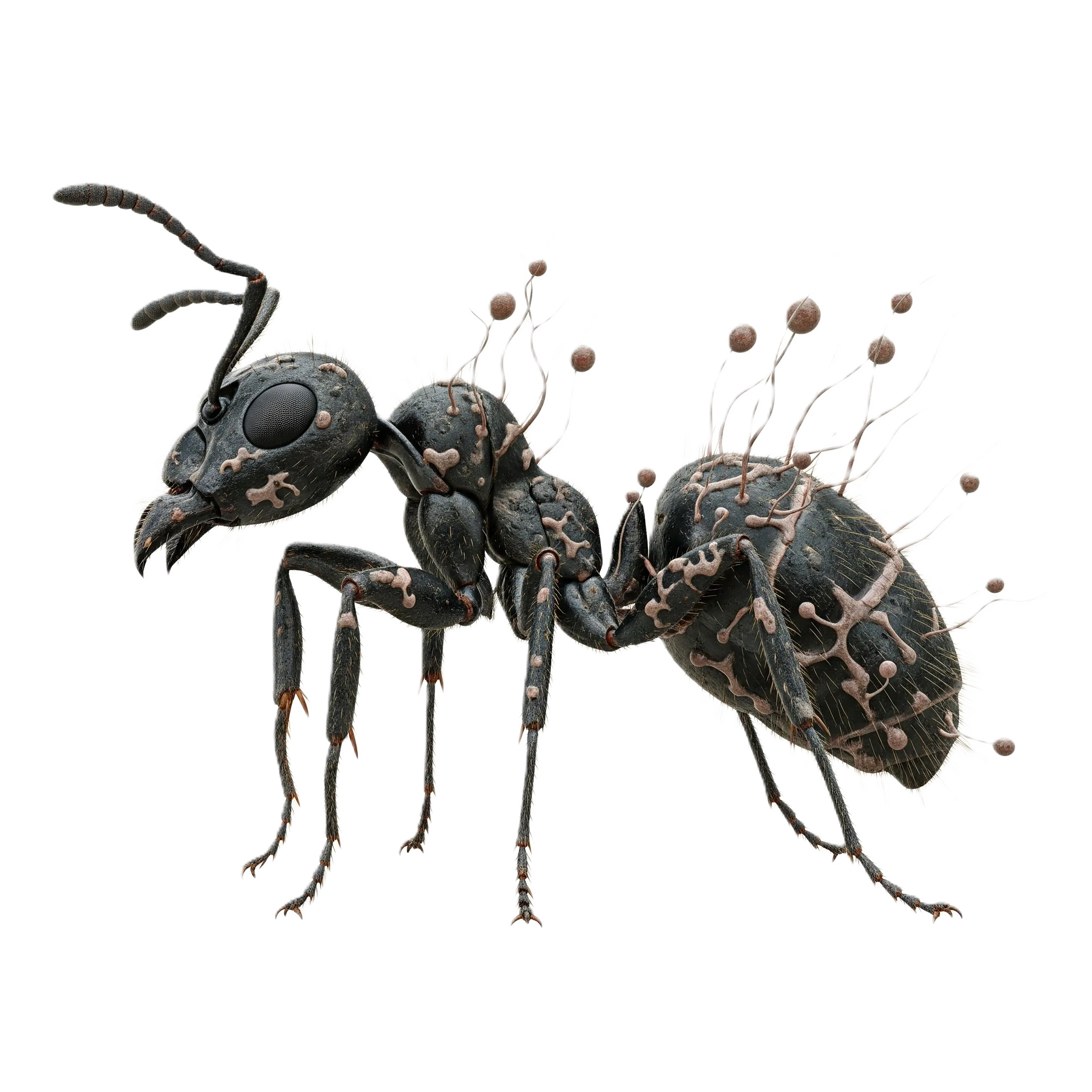
Ophiocordyceps unilateralis doesn't just kill ants. It hijacks their brains first, walks them to a specific leaf at a specific height, and then — and only then — detonates.
Specimen classification
Type
Parasitic Fungus
Target
Carpenter ants
Location
Tropical forests worldwide
On Earth for
48 million years
Most parasites just eat their hosts or hitch a ride on them. This one is different. Ophiocordyceps unilateralis takes over an ant's entire body, walks it to a specific location chosen by the fungus, forces it to bite down on a leaf and lock its jaw permanently — and only then does it kill the ant and explode out of its head.
It is, by any reasonable measure, one of the most alarming things in nature.
Zombie Ant Fungus


This fact has been locked for your safety.
How it gets inside
Fungal spores sit on the forest floor waiting for an ant to walk over them. When one does, the spores stick to the ant's exoskeleton and drill through it using enzymes — like tiny biological drills. Once inside, the fungus starts spreading through the ant's body.
The ant has no idea. It keeps working. The colony has no idea either. Everything looks completely normal. For a while.
Weird detail
The fungus spreads through muscle fibers, not through the brain. It controls the ant's body while leaving the brain intact.
The takeover
After 4 to 10 days, the ant starts acting strange. It leaves its normal path. It stumbles. Then, it climbs.
The fungus guides the infected ant to a precise spot: 25 centimetres above the forest floor, on the north side of a plant, where temperature and humidity are exactly right for the fungus to grow. The ant doesn't choose this location. The fungus does.
At solar noon — the moment of maximum sunlight — the ant bites down on a leaf vein and locks its jaw. The fungus destroys the jaw muscles to make the grip permanent. The ant cannot let go. Then it dies.
Danger
25cm above the floor. North side. Solar noon. The fungus programmes the exact location, height, and time of death.
The eruption
A stalk grows out of the dead ant's head over the following days. At the tip of the stalk is a capsule packed with spores. When the capsule bursts, spores rain down onto the forest floor below.
Where they wait for the next ant.
Science bit
Fossil evidence of the exact same bite-mark pattern has been found in leaves 48 million years old. This fungus was doing this before most mammals existed.
The brain question
For years, scientists called this “mind control.” The 2017 version of the truth is weirder. The fungus doesn't actually enter the ant's brain at all.
It surrounds the brain cells without going in. It takes over the muscles directly, through chemical signals that bypass the brain. The ant's brain is structurally intact the whole time. Its body just isn't listening to it anymore.

Dr. Icky's verdict
“Forty-eight million years. Whatever lived in those ancient tropical forests was already being zombified by this exact fungus. It was old before the dinosaurs went extinct. Think about that.”
Classify it yourself
234 specimens are waiting
Scan this specimen, survive the quiz, and master it in the free app — then hunt the other 233.