
Field Report: A Creature That Replaces Your Tongue
Dr. Icky files a report from the Gulf of California. The Cymothoa exigua enters through the gills, severs the tongue, and installs itself as a replacement. The fish keeps eating. It pays rent in blood.


Specimen classification
Type
Parasitic isopod
Target
Snappers, other fish
Location
Gulf of California, Pacific
Size (female)
Up to 3cm
Cymothoa exigua is the only known parasite in all of recorded biology that replaces a host organ with its own body and then performs that organ's function.
It enters through the gills. It severs the tongue. It installs itself where the tongue used to be. The fish keeps eating. The louse takes a cut of every meal.
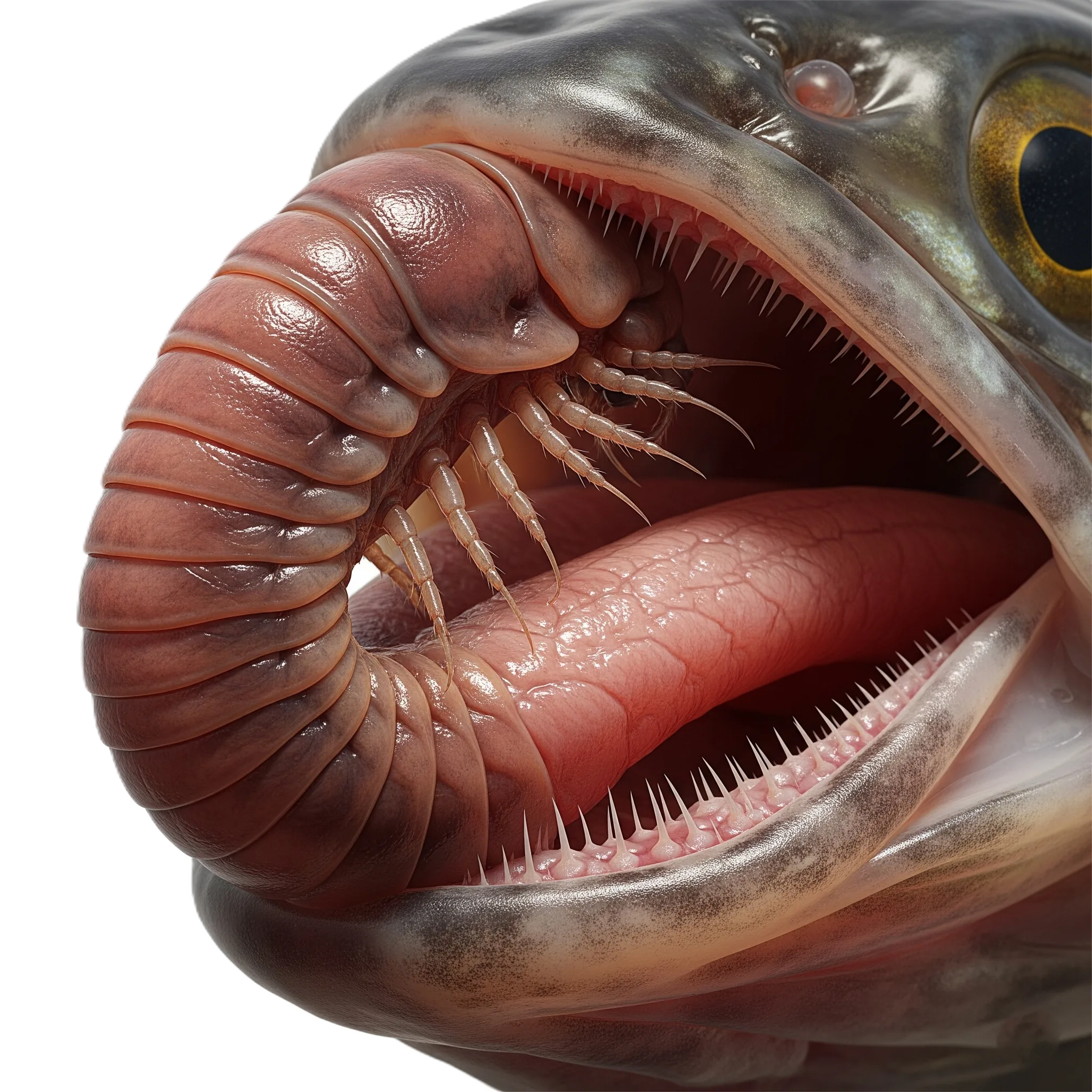
Tongue-Eating Louse


This fact has been locked for your safety.
Enters through the gills
Juvenile Cymothoa exigua are male. They enter a fish through the gills as tiny, swimming larvae. Once inside, they make their way to the mouth.
If there is already a female inside, the male stays male and attaches to the gills nearby. If there is no female, the male transforms into a female. The process takes a few weeks. It is permanent.
Weird detail
The louse changes sex based on whether a female is already present. It reads the situation and adapts.
The severing
Once the female is established in the mouth, she uses her front claws to grip the tongue and cut off its blood supply. Over time, the tongue shrinks and falls off. The louse then attaches directly to the tongue muscles using her back legs.
She is now the tongue. The fish uses her to hold food and swallow, exactly as it used its original tongue. She moves when the fish's mouth muscles move.
Danger
This is the only case in nature of a parasite replacing a host organ and performing that organ's job.
The arrangement
The louse feeds on the fish's blood and mucus. Some research suggests she also takes a portion of whatever food passes through the mouth. The fish survives — sometimes for years — with this arrangement running.
When the female reproduces, her larvae are released into the water. Some of those larvae will find gills of their own.
Science bit
Cymothoa exigua has been found in at least 8 species of fish. One was found inside a fish bought at a UK supermarket in 2005.

Dr. Icky's verdict
“One confirmed case of a parasite replacing an organ and performing its job. One. Documented. In the scientific record. The fish just keeps eating. It doesn't know. It cannot know.”
Classify it yourself
234 specimens are waiting
Scan this specimen, survive the quiz, and master it in the free app — then hunt the other 233.