
Why the Hagfish Is the Grossest Fish That Is Not Actually a Fish
In 0.4 seconds, one hagfish produces enough slime to fill a bucket. Scientists have measured this. Some of them regret it.


Specimen classification
Type
Not actually a fish
Location
Deep sea, worldwide
On Earth for
300 million years
Slime output
20 litres from a small blob
The hagfish is 300 million years old. It has no jaw, no vertebral column, no eyes that form images, and no stomach. When a predator attacks it, it releases a dense, expanding slime that can clog a shark's gills in under half a second.
Scientists have measured the slime volume. Some of them regret it.
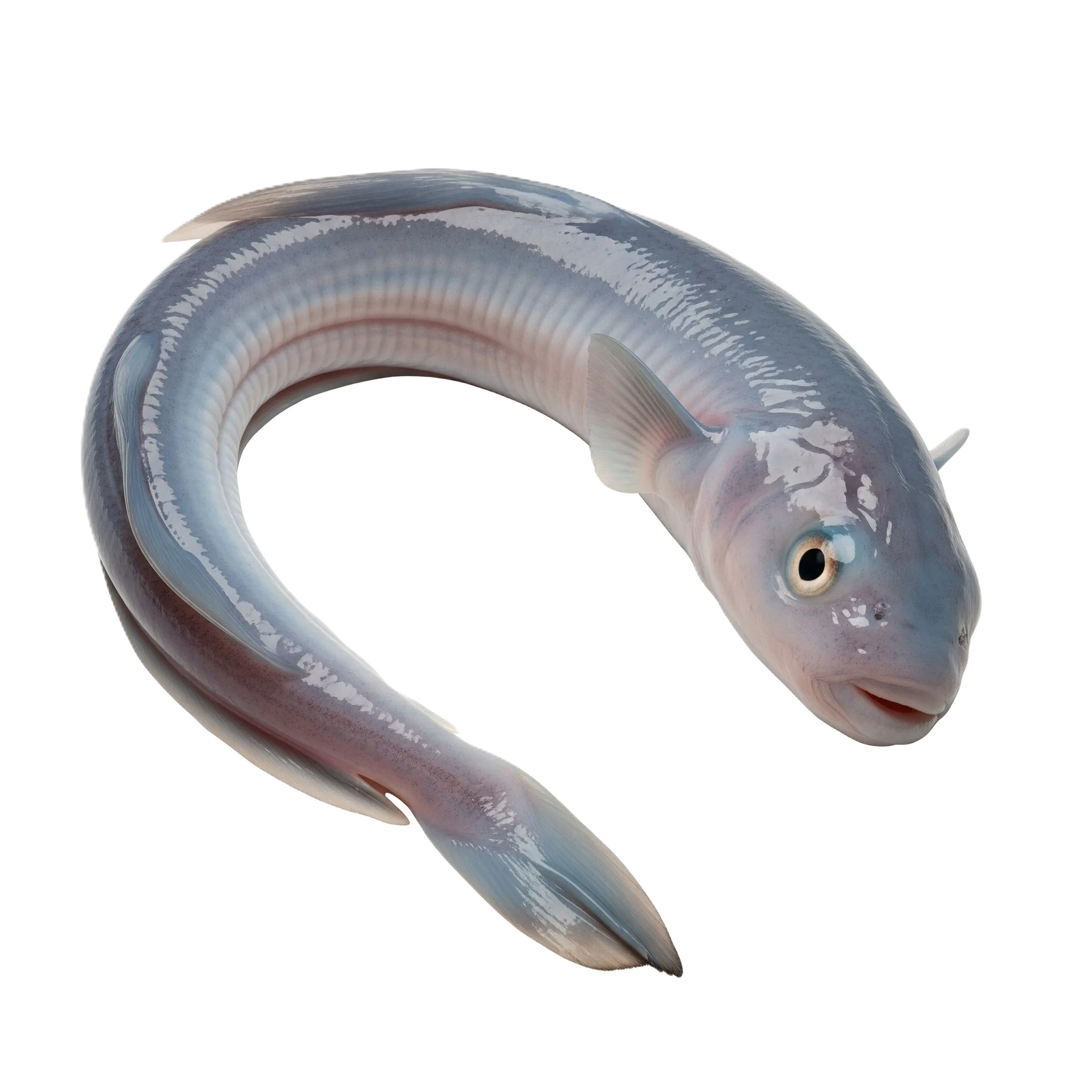
Hagfish


This fact has been locked for your safety.
Not a fish
Hagfish belong to the class Myxini. They have no jaw, no paired fins, no true spine, and no scales. Calling them a fish is roughly like calling a jellyfish a fish — technically wrong, just confusing.
They have four hearts. No stomach — food goes from mouth to gut with nothing in between. And they can absorb nutrients directly through their skin, which means they are, in a measurable sense, eating whatever water they are submerged in.
Weird detail
The hagfish lineage has remained essentially unchanged since the Carboniferous period — before dinosaurs, before most things that currently exist.
The slime
Glands running along both sides of the hagfish's body contain coiled protein threads and mucin proteins in a compact, compressed state. When released into seawater, the threads uncoil — up to 15 centimetres each — and the mucins swell to bind everything into a gel.
The expansion ratio is roughly 10,000 to 1. A small initial volume becomes approximately 20 litres of slime. It takes under half a second. Sharks have been filmed abandoning attacks because the slime clogged their gills before they could bite.
Science bit
The slime threads have been compared to spider silk in terms of tensile strength. Scientists at University of Guelph are studying them for sustainable fibre production.
How it removes the slime from itself
After producing slime, the hagfish is covered in it. To clean itself, it ties its own body into a knot — literally — and slides the knot from head to tail, scraping the slime off. This takes approximately one second.
It uses the same knot to feed. When eating inside a dead whale carcass, it braces itself against the inside walls using a body knot, bites a piece of tissue, then pulls the piece free by straightening the knot.
Danger
A hagfish can survive for over 30 weeks without food — partly because it absorbs nutrients directly through its skin from the water around it.

Dr. Icky's verdict
“300 million years. Before the first dinosaur. Before the first mammal. Before most things currently on this planet. The hagfish was already doing this. It did not need to evolve further. It was already perfect.”
Classify it yourself
234 specimens are waiting
Scan this specimen, survive the quiz, and master it in the free app — then hunt the other 233.