
The Tiny Octopus with a Venom Warning Light
The blue-ringed octopus is small enough to hide in a shell, but when its electric-blue rings flash, the message is simple: back away before the painless bite becomes a paralysis problem.

Specimen classification
Type
Venomous cephalopod
Lives
Indo-Pacific reefs and tide pools
Warning
Flashing blue rings
Venom
Tetrodotoxin saliva
The blue-ringed octopus looks like something a tide pool invented to trick curious hands. It is small, soft, and decorated with bright blue rings that seem almost too pretty to be a warning label.
That is exactly what they are. When those rings flash, the octopus is not showing off. It is saying: this tiny body is carrying one of the nastiest nerve toxins in the ocean.
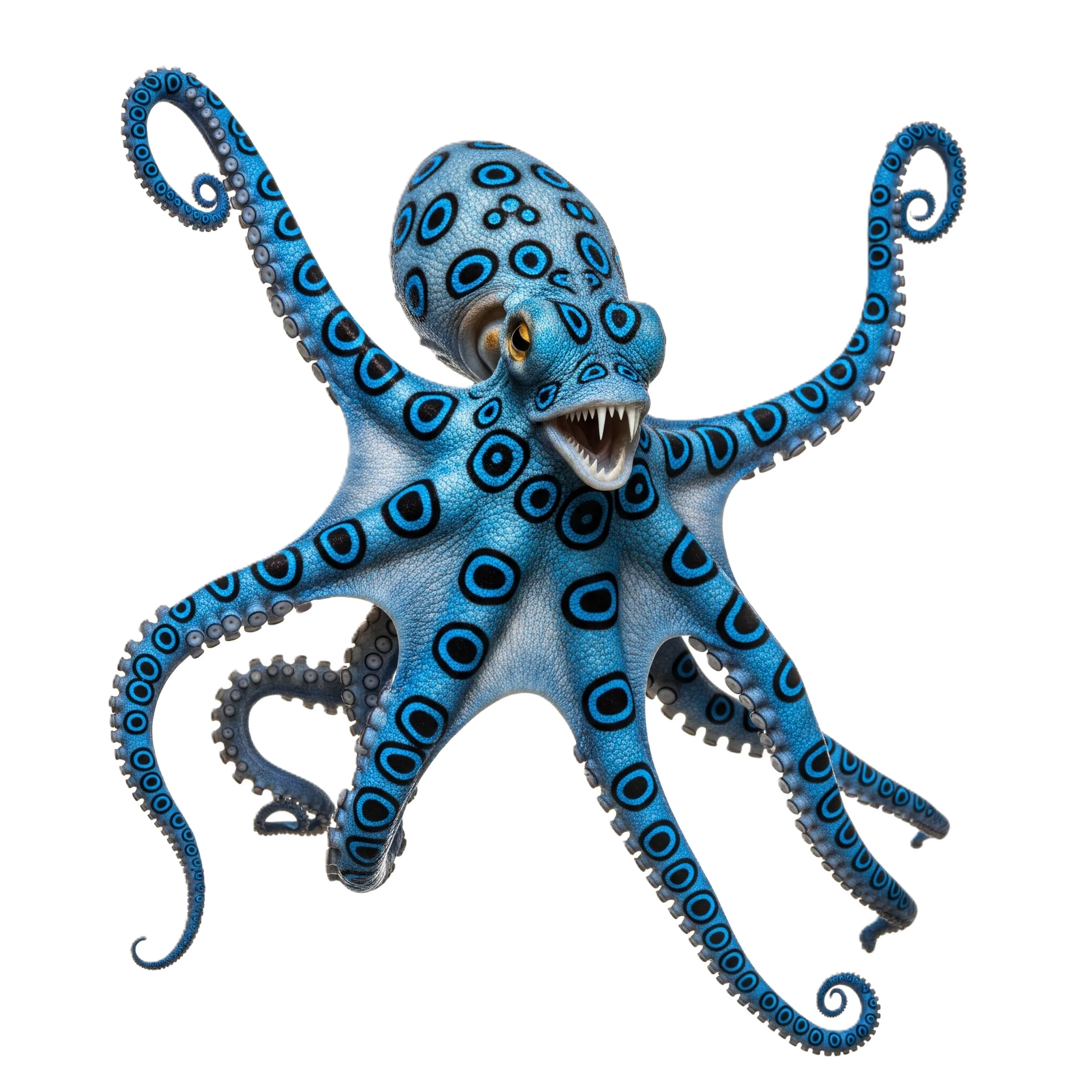
Blue-Ringed Octopus

This fact has been locked for your safety.
The prettiest stop sign
Blue-ringed octopuses spend much of their time tucked into cracks, shells, coral rubble, and rocky seafloor hideouts. Most of the time, they would rather stay hidden than start trouble.
If a predator gets too close, the disguise changes. The octopus flashes bright blue patterns across its body and arms, turning itself into a living warning sign. In nature, bright colors often mean one thing: do not test me.
Weird detail
The blue rings are not just paint. Special light-reflecting skin cells help make them shine when the octopus puts on its warning display.
The bacteria in the bite
The really alarming part is hiding in the salivary glands. Blue-ringed octopuses carry bacteria that produce tetrodotoxin, the same kind of nerve toxin made famous by pufferfish.
Tetrodotoxin blocks nerve signals. Muscles stop getting the messages they need to move. That is useful when the octopus wants a crab or shrimp to stop fighting. It is a terrible surprise for anything that grabs the octopus.
Danger
The bite can be tiny and almost painless, which is the worst possible style for a bite that can cause paralysis.
Paralysis, not poison slime
This is venom, not magic goo. The octopus has to deliver it with a bite. Once tetrodotoxin is in the body, it can interfere with the muscles used for breathing while the victim may still be awake and aware.
There is no special antidote for tetrodotoxin. Doctors keep the person breathing until the toxin wears off. Dr. Icky's official field rule is therefore simple: admire the blue rings from far away, and never pick one up.
Science bit
The danger comes from blocked nerve messages, not from the octopus being aggressive. Most bites happen when people handle or harass one.
How it eats armored snacks
A blue-ringed octopus hunts small crabs, shrimp, and fish. It pounces, wraps the prey in its arms, and uses its hard beak to punch through shells or soft tissue.
Then the venom does the quiet work. The prey stops moving, the octopus gets dinner, and the ocean receives another reminder that small does not mean harmless.

Dr. Icky's verdict
“Beautiful warning lights, bacteria-made venom, and a bite that barely announces itself. It is the ocean's tiniest flashing 'absolutely do not touch' sign. Total Barf, with excellent branding.”
Classify it yourself
234 specimens are waiting
Scan this specimen, survive the quiz, and master it in the free app — then hunt the other 233.